News
-
"A Pocket for Amphibians" Wins Recognition at RHS Badminton 2026 Sunday, 12 July 2026
-
Industry Experts Vote Philodendron 'Favourite Office Plant of the Year 2026' Wednesday, 08 July 2026
-
Get Involved in The Green Journey This National plants@work Week Sunday, 05 July 2026
plants@work
How Plants Can Improve Employee Retention & Satisfaction: A Guide for HR & Facilities Managers
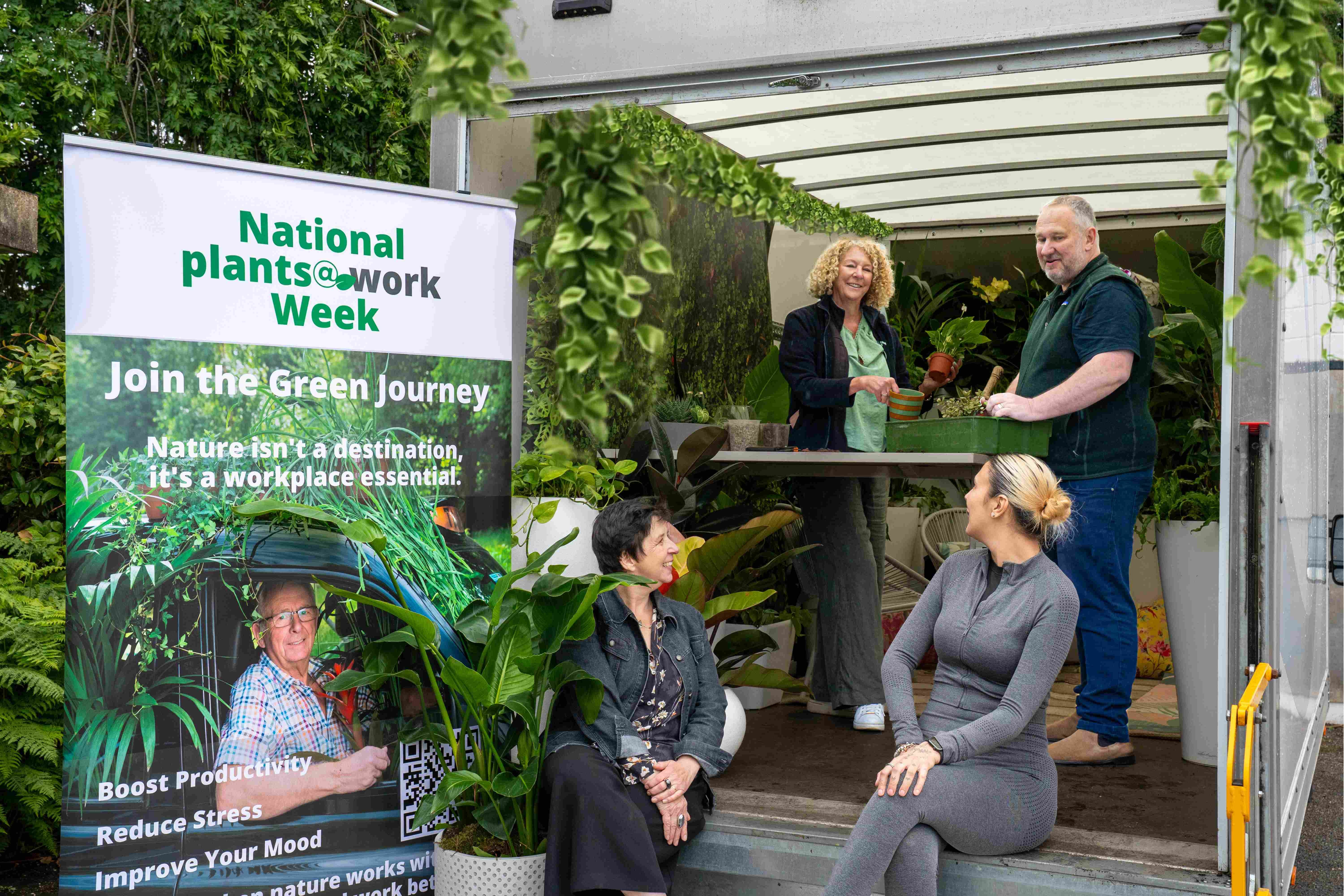
As we celebrate National plants@work Week and this year’s The Green Journey campaign, we want to draw special attention to the critical role plants play in workplace wellbeing, particularly for those in Facilities Management and Human Resources.

Plants are far more than visual enhancements — they’re a strategic asset in building healthier, more engaging workplaces. For HR professionals focused on employee wellbeing and retention, and FM teams responsible for creating productive environments, plants offer tangible value.
In today’s competitive business landscape, HR and Facilities Managers are united by a shared mission: to design workspaces where people feel motivated, supported, and inspired to stay. While flexible working, wellness initiatives, and development opportunities all play a role, one simple and cost-effective element is often underestimated — the power of plants.

Biophilic design — integrating natural elements into the built environment — has been consistently linked to improvements in employee satisfaction, mental wellbeing, and retention. For organisations looking to strengthen culture and reduce churn, bringing more nature indoors is a practical, evidence-based solution.
Why Plants Matter for People-Centric Workplaces
Reduced Stress & Better Mental Health: Natural elements in the workplace can significantly reduce stress levels and support mental health. A landmark study by the University of Exeter found that simply adding plants to sparse office spaces increased employee wellbeing by up to 47% and productivity by 38%.
Higher Job Satisfaction & Retention: Workplaces designed with employee wellbeing in mind signal that people are valued, increasing engagement, loyalty, and satisfaction. According to a report by Human Spaces, employees working in environments with natural elements reported 15% higher well-being and creativity
Enhanced Focus and Creativity: The presence of plants has been linked to improved concentration and creative thinking. A green workspace can reduce mental fatigue and encourage innovative problem-solving, both vital to long-term employee satisfaction.
Strengthened Organisational Culture: Plants help shape inviting, inclusive spaces that support collaboration and connection. For Facilities Managers, biophilic design can also be a visual representation of ESG and wellbeing values — a key differentiator in competitive talent markets.
How FMs and HR Teams Can Take Action
-
Integrate plant-based enhancements into wellbeing or retention strategies.
-
Even a few well-placed plants in communal areas or on desks can make a difference.
-
Engage Employees - Consider team planting activities or “adopt a plant” schemes to foster ownership and connection.
-
Measure Impact - Monitor changes in absenteeism, engagement surveys, or employee feedback to track the benefits over time.

Employee satisfaction isn’t only about perks or salary — it’s about how people feel in the spaces they work. Plants are a powerful tool to create environments where employees feel better, stay longer, and do their best work.
Investing in biophilic design is a low-cost, high-impact way to improve workplace culture. Whether it’s a living wall, potted plants on desks, or communal green zones, the presence of plants can shift the office vibe from functional to flourishing.

Whether you're managing workplace design or developing HR policy, incorporating greenery into your strategy is a scientifically supported, human-centred solution to build thriving, sustainable organisations.
To support our mission, plants@work has developed a valuable resource: the "Plant Perfect Partners" booklet. This practical guide helps identify ideal plant pairings for various interior spaces, providing inspiration and expert advice on integrating greenery into offices, communal areas, and shared workspaces. Whether you're planning a large-scale biophilic redesign or simply introducing more plants into a reception area, this booklet offers accessible, actionable guidance.
You can download Plant Perfect Partners Here
Let’s create workspaces people are glad to return to — and don’t want to leave.
- Tags: #BiophilicDesign, #PlantsAtWorkWeek, FM, HR, National plants@work Week, Plant benefits, The Green Journey