






Welcome to plants@work
- Industry Representation
- Great Business Opportunities
- Fantastic Training Programme
- Networking




Who We Are
News
-
The Benefits of Indoor Plants in Classrooms: Celebrating Teachers’ Day with Nature’s Touch Monday, 05 October 2026
-
plants@work congratulates Ian Drummond on another accolade Wednesday, 30 September 2026
-
Celebrating Our Industry, Inspiring Its Future, Leaf Awards Conference, 8 October 2026 Tuesday, 22 September 2026
-
Don’t panic, stay calm – it’s 100 days to Christmas! Wednesday, 16 September 2026
Compact Green Icons — Small Plants with Lasting Appeal in Commercial Interiors of the Past 25 Years
When we think about plants in commercial interiors, it is often the large specimens that capture the imagination: towering palms, mature Ficus trees and dramatic architectural plants that transform atriums and reception spaces.
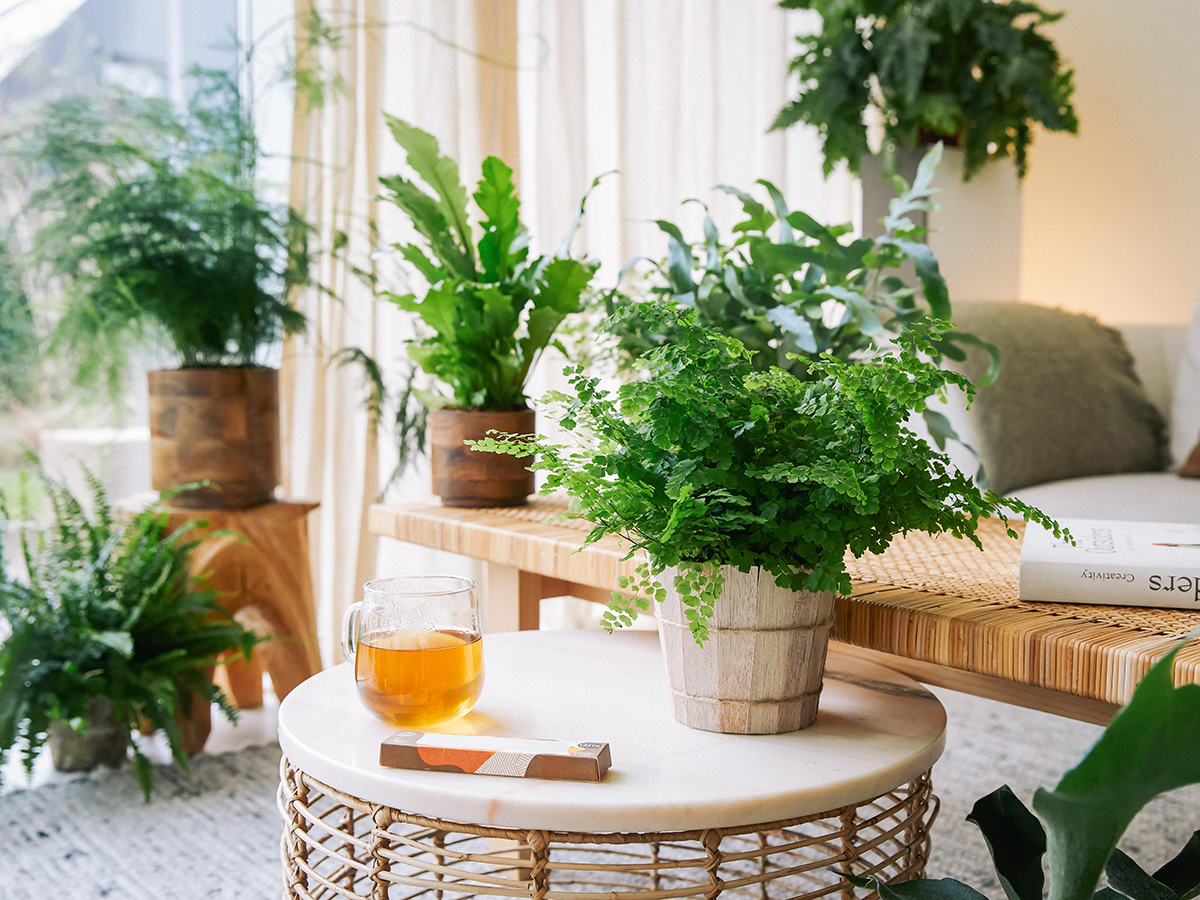
But successful interior landscaping is not always about size. Some of the most enduring plants in commercial interiors are compact, adaptable and easy to integrate into the everyday workplace. From desks and shelving to meeting rooms, breakout areas and reception counters, smaller plants bring texture, colour and character without demanding significant space.
Over the past 25 years, several compact species have become familiar favourites within the interior landscaping industry. Their enduring popularity reflects not only their appearance, but also their versatility and ability to work within the practical realities of commercial environments.
Parlour Palm — Chamaedorea elegans
Few small palms have enjoyed the longevity of the Parlour Palm. Delicate and graceful, Chamaedorea elegans has been a familiar feature of offices for generations. Its fine, arching foliage provides movement and texture without dominating a desk, tabletop or planter display. It is also relatively tolerant of lower-light conditions, making it particularly useful where natural light is limited. For commercial interiors, the Parlour Palm demonstrates that a plant does not have to be large to make a significant contribution.

Aspidistra
The name says much about its reputation. Aspidistra is one of the great survivors of the indoor plant world. Its broad, glossy, dark-green leaves provide a dependable green presence in locations where other plants may struggle. It is well suited to lower-light areas and can cope with less-than-perfect watering routines, making it an attractive option for challenging corners of commercial interiors. Its understated appearance is part of its appeal: rather than demanding attention.

Croton
Sometimes a commercial interior needs more than green. Croton brings colour, energy and a distinctly tropical character to the workplace. Its leathery leaves can display striking combinations of green, yellow, orange and red, creating an instant focal point within smaller planting displays. However, maintaining its strongest colouration depends on providing sufficient light. Used thoughtfully, Croton can introduce warmth and visual energy into reception areas, meeting spaces and mixed planting schemes.

Calathea
Calatheas bring something different to commercial planting: intricate foliage that can look almost hand-painted. With beautifully marked leaves and contrasting patterns, they introduce a sense of living artwork to desks, shelving and collaborative spaces. Their natural leaf movements also add another dimension, with some varieties raising or folding their leaves in response to changing light conditions. For designers, Calatheas demonstrate how compact plants can contribute not just greenery, but pattern, movement and visual interest.

Spider Plant
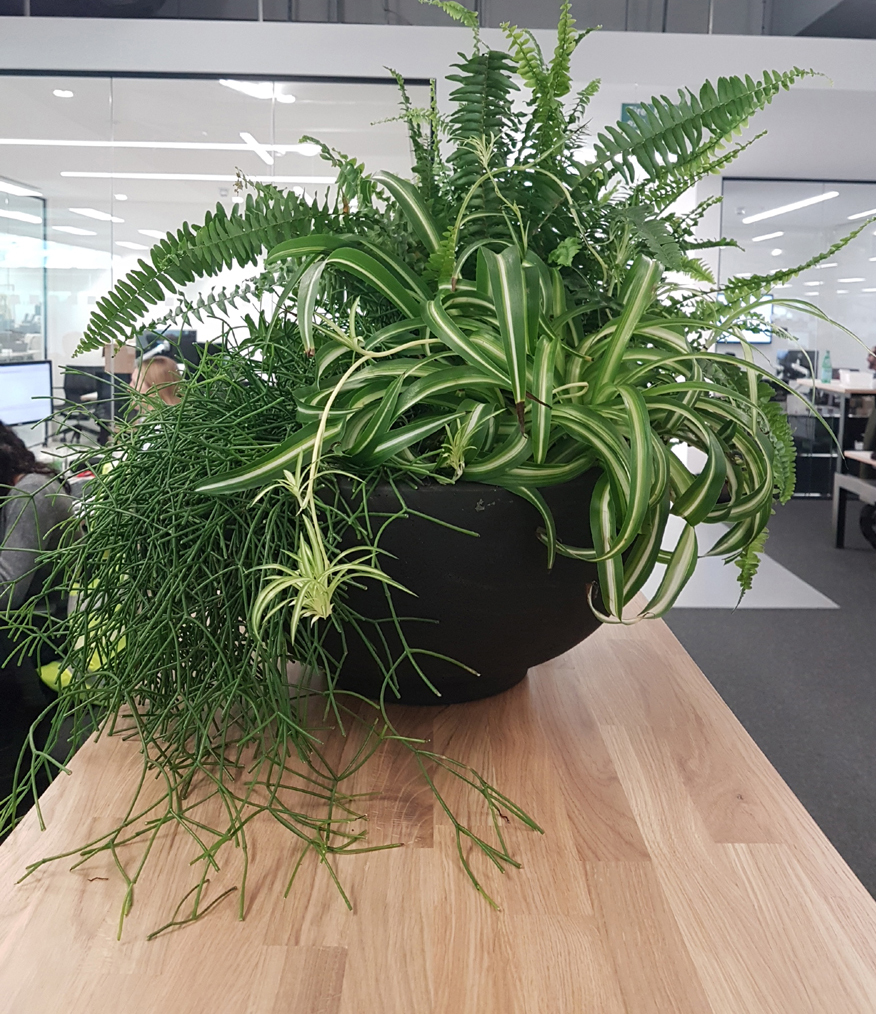
The Spider Plant is one of the most recognisable indoor plants and remains a highly versatile choice for commercial interiors. Its long, arching leaves provide a softer, cascading form that works particularly well in raised planters, shelving and desktop displays. Its ability to produce offsets, or "pups", has also made it an enduring favourite for propagation. Its familiar appearance, adaptability and relatively straightforward care requirements have helped Chlorophytum comosum remain relevant despite changing workplace fashions.
Phalaenopsis Orchids
Few compact plants communicate hospitality and sophistication quite as effectively as the Phalaenopsis orchid. With elegant, butterfly-like flowers carried on tall stems, orchids are particularly effective on reception desks, boardroom tables and executive areas. Their blooms can provide weeks of colour, creating an immediate sense of occasion and helping to reinforce the visual identity of a premium environment. In commercial interiors, orchids demonstrate how a relatively small plant can have an outsized impact.

Bromiliads
For a concentrated burst of colour, bromeliads remain a favourite of interior landscapers; they can introduce intense reds, oranges, yellows and other vibrant tones into planting schemes. Their distinctive forms provide an exotic contrast to conventional foliage plants. With their architectural shape and strong colour, bromeliads are particularly effective when used as accents within mixed displays or as standalone features on desks and reception counters.

Maranta
Maranta bring intricate pattern and a softer, spreading habit to interior planting. Their distinctive leaf markings can add complexity to mixed planter boxes, shelving and lower-level displays, where a compact plant is needed to fill space without creating visual bulk. They are a useful reminder that small plants can provide considerable design detail when carefully selected and positioned.

Ficus benjamina
While Ficus benjamina can grow into a substantial specimen, smaller plants and carefully trained forms have long been used to create a tree-like aesthetic in more compact commercial spaces. Braided stems and its delicate, slightly weeping canopy give it a refined appearance, making it particularly effective in receptions, lounges and hospitality areas. It occupies an interesting position between desktop planting and large-scale specimen planting — offering the character of a tree while remaining suitable for smaller spaces.

The enduring popularity of these plants highlights an important principle in commercial interior landscaping: impact is not necessarily proportional to size. Compact plants can soften hard architectural lines, introduce colour and texture, define personal workspaces and create visual connections between different areas of an interior. They can also be refreshed, rearranged and incorporated into planting schemes with greater flexibility than very large specimens.
As workplace design continues to evolve, the role of smaller plants is unlikely to diminish. Whether creating a welcoming reception, adding life to a workstation or bringing detail to a collaborative space, these compact green icons have earned their place in the history — and future — of commercial interior landscaping.
After 25 years of changing fashions, technologies and workplace environments, their lasting appeal is perhaps the strongest evidence of all: good plants, in the right place, never go out of style.
