News
-
The Architects of Indoor Nature: Celebrating the International Interior Landscaper Day Tuesday, 14 April 2026
-
International Interior Landscaper Day 15 April Thursday, 09 April 2026
-
World Health Day 2026: Why Botanical Spaces are Essential for Public Health Tuesday, 07 April 2026
plants@work
Celebrating International Teacher’s Day
Today is International Teachers' Day and to make known how plants can help learning environments, we have published this press release.
Celebrating International Teacher’s Day
Teaching can be the most rewarding job, nurturing young people, helping them to discover the world, assisting in developing their imagination is the profession that only the most special people can measure up to.
Celebrating today’s International Teachers’ Day we would like to pay tribute to the classroom heroes and focus on their working environment, putting the case for adding plants to the classroom and beyond. This can improve the learning surroundings for both teachers and pupils.

A wealth of research
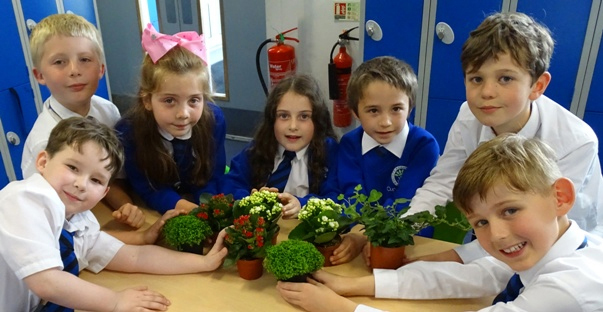
This all feeds into the wealth of research available about the general benefits of plants, creating healthy, green learning environments is a good starting point. For instance, green spaces can be added with some planting, rather than completely concreted playgrounds, while potted plants, green walls or green pictures can make a big difference to classrooms and communal spaces. Additionally students could help take care of plants as an added bonus.
1. Some specific benefits to including plants in classrooms embrace better concentration (23%) and improvement in core subjects such as spelling, maths and reading of between 10 - 14% according to research carried out in Australia.
2. Other research suggests that green spaces improve our concentration abilities because of their perceived and real peaceful element.
3. In Scandinavia, plants in classrooms produced fresher air and less complaints of minor ailments such as headaches, sore throats and cold symptoms which were reduced by as much as 33%.
4. More evidence-based research has shown that contact with nature has a positive effect on children's mental and cognitive development as well as their memory and attention spans.
5. As we've seen in a number of studies, just the visual connection with nature is beneficial. One study confirmed that it provides a positive impact on cognitive, psychological and physiological responses and can influence our individual mental health, performance and well-being and is particularly helpful for those on the autism spectrum.
Teachers benefit too
Of course if greener spaces are benefitting pupils, teachers will also benefit too in the calming and healthier environments with the added benefit of students who are calmer and more comfortable in the space.

Teacher courtesy of Pexel
Bringing Nature into the Classroom
Just before the COVID pandemic, Putney High School took part in an experiment introducing biophilia into two of their classrooms. The Maths room was decorated with plants, the English classroom featured a wall sized poster of woodland.
The students were monitored over the winter and the results were impressive: after four months, 78% of the pupils told the researchers that they actually ‘felt healthier’. Not only did the study demonstrate a measurable improvement in brain boosting oxygen, but perhaps more interestingly, it showed a marked change in the behaviour and perceptions of those involved’.
Beyond the classroom
Many educational buildings feature fantastic atria that can be used to bring nature inside. The plants@work Best Project 2022, the refurbishment of the Atrium at Sheffield Hallam University designed by Urban Planters South Yorkshire incorporates biophilic design in the space used by all the students and staff.
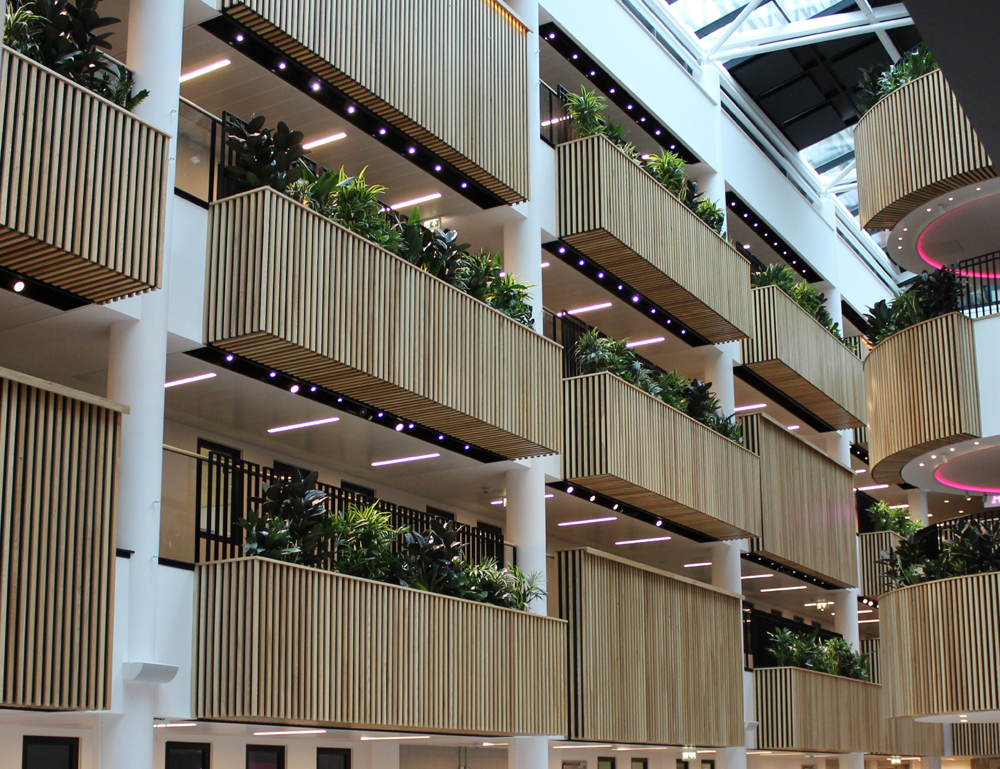
Part of the planted atrium at Sheffield Hallam designed and planted by Urban Planters South Yorkshire
A sweeping planting scheme for the university’s vast atrium and the cafeteria features mixed planters alongside the railings on walkways creating a very warm and welcoming environment.
Biophilic design
Briefly, biophilic design or biophilia is the concept of bringing nature into the design. It’s about more than using plants although of course they do go a long way to adding a natural concept to any building.
Biophilia is about using natural materials like wood, cotton, natural light and ventilation and even the presence of water wherever possible. Considering the landscape outside of the building too.
Some indirect contact with nature can also help such as images of nature, natural materials and natural colours and the sounds of nature.
ends
..........................................................................................................................................................................................................
Editor's notes
International Teacher’s Day was first celebrated on this day in 1966 and eventually came under the international banner in 1994.
In 2021, a representation of the classrooms from Putney School appeared at the Chelsea Flower Show winning a Gold medal.
2022 plants@work Best Project 2022 Design & Installation.
https://www.plantsatwork.org.uk/index.php/news/item/best-project-2022-design-and-installation
Research:
Plants in the classroom can improve student performance : Prof Margaret Burchett et al 2010
Green spaces and cognitive development in primary school children: Payam Dadvand et al
The Cognitive Benefits of Interacting With Nature: Marc G. Berman, John Jonides and Stephen Kaplan
Putney School GDST The Biophilic Classroom Study – May 2020 Final Report: Clare Louise Bowman, De Montford University with support of Prof Derek Clements Croome, Reading University
Published by:
https://www.hortweek.com/indoor-plants-promoted-world-teachers-day/landscape/article/1801124