


Welcome to plants@work
Welcome to the Plants at Work (formerly efig ltd) website - the association representing Interior Landscapers by promoting the use and benefits of Interior Plants.
There are many benefits of joining us, including:
- Industry Representation
- Great Business Opportunities
- Fantastic Training Programme
- Networking




Who We Are
News
-
The Architects of Indoor Nature: Celebrating the International Interior Landscaper Day Tuesday, 14 April 2026
Beyond the Tick-Box: Mastering the 14 Patterns of Biophilic Design
A recurring challenge in modern architecture is the danger of "cost engineering" nature into a mere tick-box exercise. Achieving a high-level building certification does not automatically mean a space has been created where people actually want to be.
To move beyond a rigid "plantation" of identical plants and create truly enriching environments, designers frequently turn to the 14 Patterns of Biophilic Design—a framework developed by Terrapin Bright Green that is currently being investigated for integration into BREEAM. These patterns bridge the gap between simple greenery and the subtle, qualitative "human spatial response" that makes a built environment feel genuinely alive.
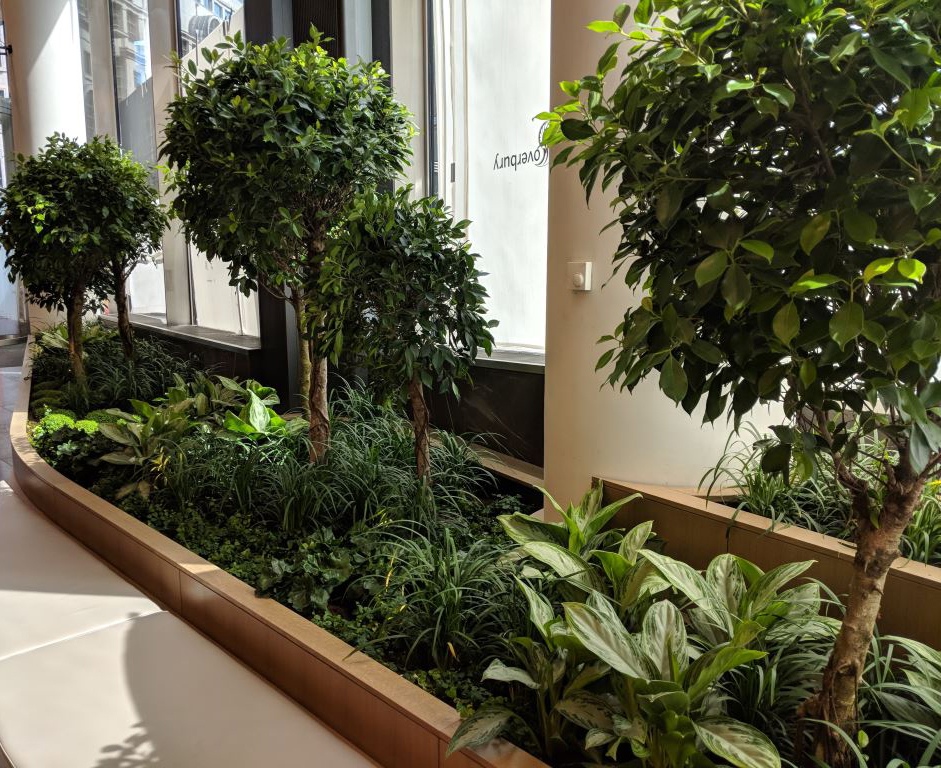
Here is how those patterns break down into three essential categories of human experience:
1. Nature in the Space: The Direct Connection
This category is about the "real, sensory bits of nature" that we can see, touch, and smell. It’s the most recognisable form of biophilia, but as the panel noted, it must be more than just a visual prop.
- Visual Connection with Nature: Views of elements of nature, living systems, and natural processes.
- Non-Visual Connection with Nature: Auditory, haptic, olfactory, or gustatory stimuli that engender a deliberate and positive reference to nature.
- Non-Rhythmic Sensory Stimuli: Stochastic and ephemeral connections with nature, like the rustle of leaves or the movement of water.
- Thermal & Airflow Variability: Subtle changes in air temperature, humidity, and airflow across the skin.
- Presence of Water: A condition that enhances the experience of a place through seeing, hearing, or touching water.
- Dynamic & Diffuse Light: Leveraging varying intensities of light and shadow that change over time to mimic natural conditions.
- Connection with Natural Systems: Awareness of temporal and seasonal changes in a living system.
2. Natural Analogues: The Indirect Connection
When live plants aren't feasible—or to reinforce them—we use "mimics" of nature. These are non-living, evocative representations of natural patterns.
- Biomorphic Forms & Patterns: Symbolic references to contoured, patterned, textured, or numerical arrangements that persist in nature.
- Material Connection with Nature: Materials and elements from nature that, through minimal processing, reflect the local ecology or geology.
- Complexity & Order: Rich sensory information that adheres to a spatial hierarchy similar to those encountered in nature.
3. Nature of the Space: The Human Spatial Response
This is the "fundamental design" aspect that Heath argued is so often missed. It addresses our innate psychological need for safety, exploration, and autonomy.
- Prospect: An unimpeded view over a distance, for surveillance and planning.
- Refuge: A place for withdrawal from the main environmental condition or the flow of activity, where the individual is protected from behind and overhead.
- Mystery: The promise of more information, achieved through partially obscured views or other sensory devices that entice the individual to travel deeper into the environment.
- Risk/Peril: An identifiable threat coupled with a reliable safeguard (e.g., a high walkway or glass floor).

Why the Patterns Matter: Avoiding the "Caged Animal" Effect
A powerful study by Urban Planters demonstrated the critical impact of environmental design when plants were removed from an enriched workspace, causing employees to react like "caged animals." The 14 Patterns of Biophilic Design help prevent this stark decline in morale by catering directly to the diversity of human needs.
For instance, roughly 20% of the population is neurodivergent. Some individuals are hypersensitive and might find a dense, "jungle-like" office overwhelming, while others are hyposensitive and require that high level of sensory stimulation to thrive. Because of these differing needs, autonomy—the ability to choose between an open "prospect" view or a quiet "refuge"—stands as the single biggest predictor of well-being in the workplace.
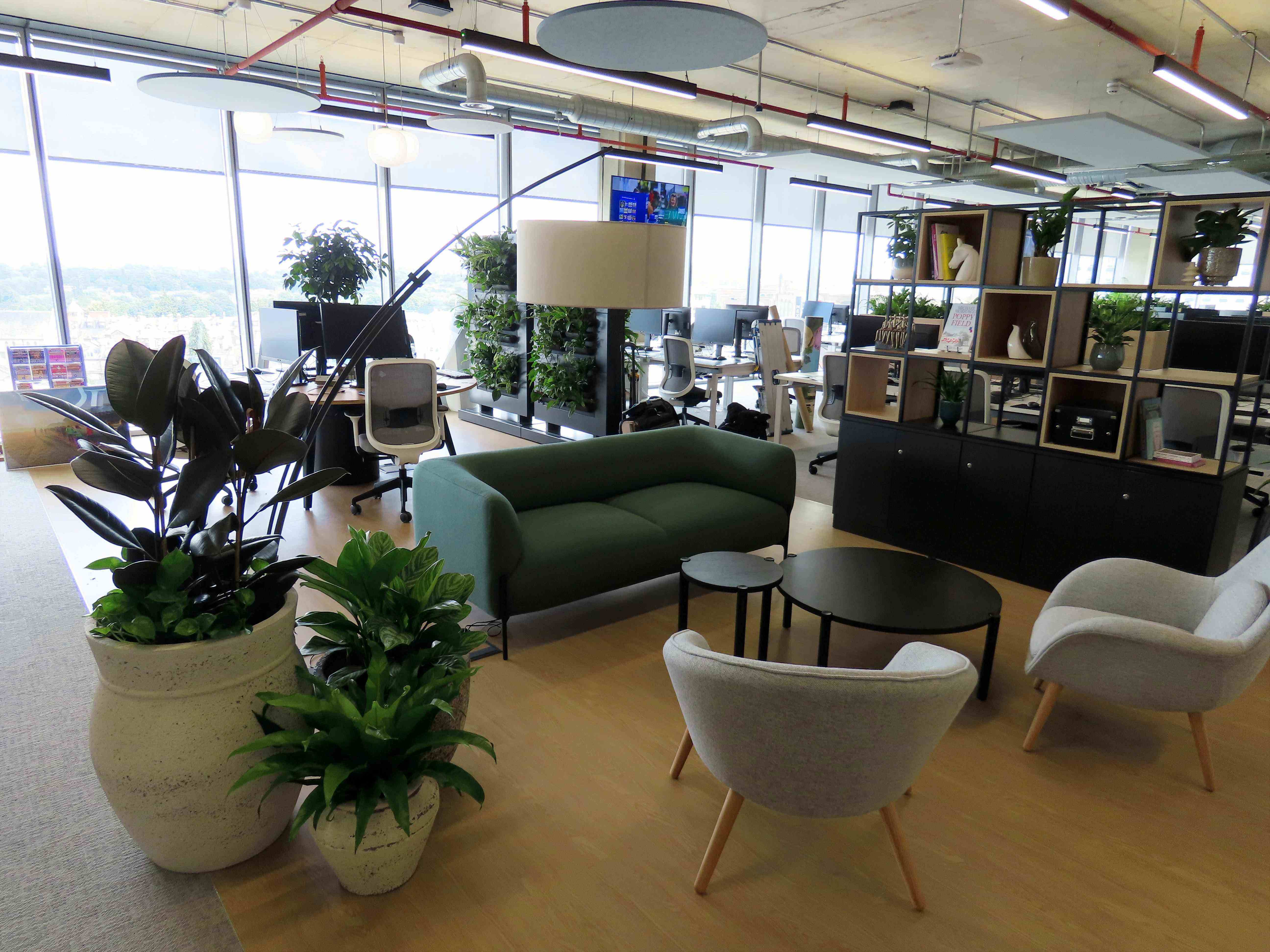
Biophilic design is not just about putting plants in greenery; it’s about how we design spaces where people can actually have a positive and enriching experience. By utilising the 14 Patterns, designers can move away from superficial compliance and toward environments that truly support the "human animal" in a digital world.
- Tags: #BiophilicDesign, 14 Patterns